5 Fast Facts You Need To Know About The Jones Act
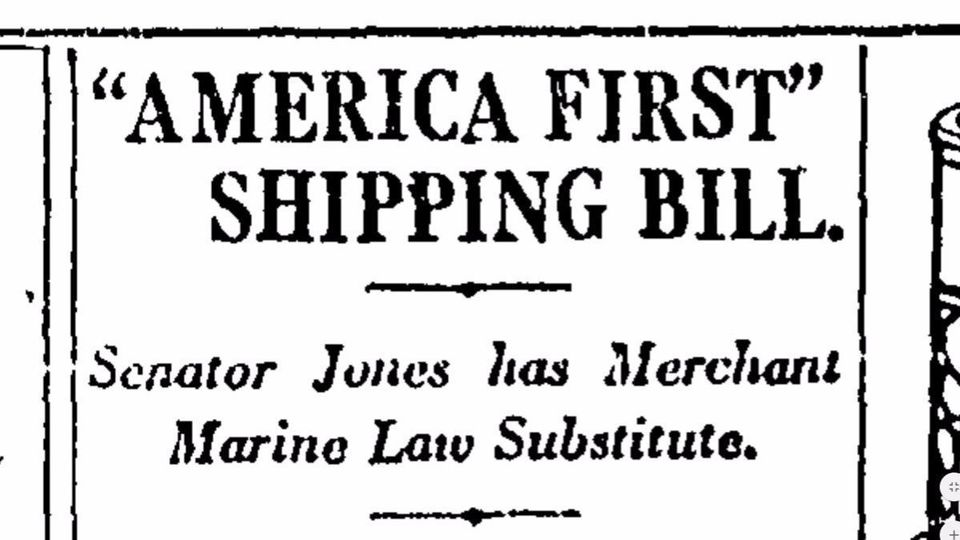
Ever since Hurricanes Irma, Harvey, & Maria tore through the United States & Puerto Rico, relief efforts have been in full force. While President Trump issued a 10-day waiver of exemption on the Merchant Marine Act of 1920, debate about the century old protectionist shipping act raged on. Mainly that it should repealed for good as it inhibits aid in the worst of times and increases the cost of consumer goods to some U.S. islands in the worst of times. But, is that a fair assessment?
Here are 5 Fast Facts you need to know about the Jones Act:
-
The Merchant Marine Act of 1920, aka the Jones Act, is a U.S. Law that regulates maritime commerce in U.S. Waters, between U.S. Ports, and along its shores. The Jones Act is a cabotage law that requires all goods transported by water between U.S. Ports be carried on U.S. Flagged ships, built in the United States, owned by her citizens, and crewed by U.S. Citizens and permanent residents.
So, for example, a container ship sailing from Beijing couldn't arrive in New York, pick up cargo, and then transport it to Boston. Or in the case of Hurricane relief, that ship couldn't pick up cargo in New York and deliver it to Puerto Rico as that would be considered domestic trade and would be regulated by the Jones Act. -
According to American Maritime Partnership, there are roughly 40,000 Jones Act vessels in operation. However, that number may be misleading as the vast majority of those are tug boats and smaller craft. There are currently less than 40 Jones Act container ships.
-
The Jones Act is intended to provide American jobs, protect American ship building, and to aid in National Security by adding to the Navy & Coast Guards sea-lift capacity. American Maritime Partnership estimates that Jones Act protected industry provides employment for 500,000 U.S. Citizens and repealing it would cost up to $100 billion dollars.
-
While Puerto Rico is subject to the Jones Act, the U.S. Virgin Islands are not. Despite being 112 miles apart, (roughly the distance between Boston, MA & Hartford, CT) Puerto Rico falls under U.S. Customs law while the U.S. Virgin Islands do not.
It is worth noting that both Puerto Rico & the U.S. Virgin Islands suffered similar issues receiving hurricane relief as infrastructure damage to ports and roads as well as a lack of available trucks hampered efforts to release and distribute goods from the ports. -
Foreign carriers CAN call Puerto Rico or any other area regulated by the Jones Act. It's hard to argue that the act doesn't raise the cost of goods in non-contiguous U.S. States however it in no way prevents foreign vessels from calling those ports if they so desired. What it does do is limit shippers' options as ultimately there are fewer carriers to choose from and those carriers tend to charge a premium along those shipping lanes.
Is it time to repeal or modify the Jones Act? Leave a comment and let us hear your side of the debate.