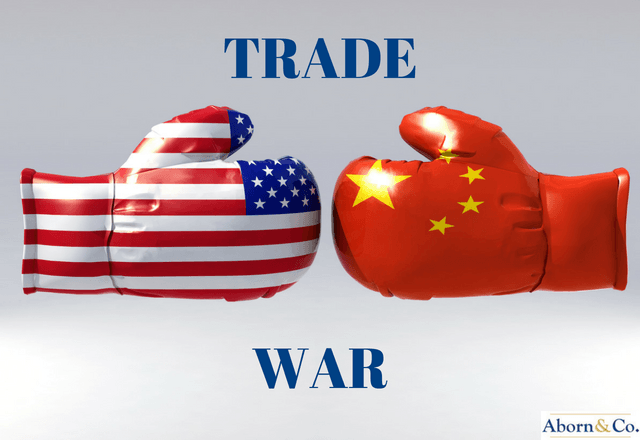
Trade War: US and China Hit Each Other With $16B in New Tariffs
Article in brief
-US and China imposed $16 billion in 25% tariffs on each other in on going trade war
-Long Beach/LA had its busiest month ever as companies hurried to receive raw capital and production goods before the US and China moved forward with retaliatory tariffs.
-According to Reuters, many US companies will be absorbing the costs and pushing them directly to consumers. Demand for Chinese imports included in the first round of tariffs seem generally inelastic.
-American and Chinese companies may alter shipping routes as they shift sourcing to new areas.
-US has threatened China with an additional $200 billion in tariffs
At midnight, the US officially instated its next round of 25% tariffs against $16 billion of Chinese imports. The tax affects 279 Chinese products, including chemicals, motorcycles, and antennas.
China responded in kind with 25% tariffs on an equal amount of American goods. This will bring the total of tariffed Chinese and US goods to $50 billion.
“[China] has to continue to make necessary counterattacks." - Chinese Commerce Ministry
With many American industries already effected by the initial $34 billion of tariffs issued earlier in the summer, we can expect this second installment to continue the trend. But the question remains: how should we expect this to effect supply chain and logistics?
Initial intuition seemingly points to reduced freight prices as fewer and fewer products are shipped to and from China. While this very well may turn out to be the case, there are extenuating circumstances that could continue to send shipping prices skyward.
The Port of Long Beach, America’s second largest sea port, boasted its busiest month to-date in June. Sources hypothesize this may be due to a rush to order non-perishable Chinese goods before the first wave of American-Chinese tariffs were in place.
If American companies have any reason to believe Trump will continue issuing tariffs on the economic superpower, it is likely they will continue to stockpile any goods they expect to see taxed soon. The same goes for Chinese companies and American goods. Counterintuitively, tariffs can be associated with higher overall volume if there is reason to believe more tariffs will shortly ensue. We could see even more capacity issues for a short time while shippers continue to warehouse Chinese goods.
Restructuring of long-standing supply chains is a more probable outcome that could shake up the shipping industry in a big way. In a list compiled by Reuters, several major US companies – including 3M, Boeing, and others expect to see significant changes in their supply chain.
Business in China are bracing for impact from the tit-for-tat trade war fallout as their exports have begun to slow down, according to recent port data.
The US is threatening to levy an additional $200 billion worth of tariffs on Chinese goods. As has been the case at every stage, China has already stated that they plan to respond with 25% tariffs on $60 billion on American goods in retaliation. Due to the US exporting far less to China than China does to the US, it would now be more difficult for China to match the US dollar-for-dollar.
Are your supply chain costs going up?
Contact a trusted adviser at Aborn & Co. today for a complimentary consultation and learn how we have empowered data to save our clients over $5 billion in freight expenses. Reach out now!