The History of the Semi Truck

Timothy Dooner • August 27, 2018

Aside from electricity, it could be argued the no greater 19th century invention shaped shipping in the United States of America more than the semi truck. Predating airplanes and interstates, semi trucks allowed American farms and businesses to sell beyond their borders in ways that trains simply could not. In fact, semi trucks are still such an integral part of the American economy that they haul over 70% of the goods we consume. So, where did the semi truck come from and how has it kept up with technology to evolve into the dominate force in shipping that it is today?

Prior to the invention of trucks, freight was hauled by horse drawn carriages and trains. Railroads were highly efficient at moving large amounts of cargo but could only deliver those goods to centralized urban centers where train stations were. While this helped grow urban areas, it fundamentally limited the growth of rural areas and even towns located miles away from city centers.

That was until 1896 when Scottish immigrant, Alexander Winton, owner of the Winton Bicycle Company shifted his focus from peddles to engines. He initially experimented with single-cylinder automobile before starting his car company.

In 1897 the Winston Motor Carriage Company was incorporated in Cleveland, Ohio and they launched with a series of handcrafted automobiles. Each vehicle had ornate exteriors, with hand painted sides, as well as padded seats, a leather roof, and gas head lamps. The cars rode on B.F. Goodrich tires.
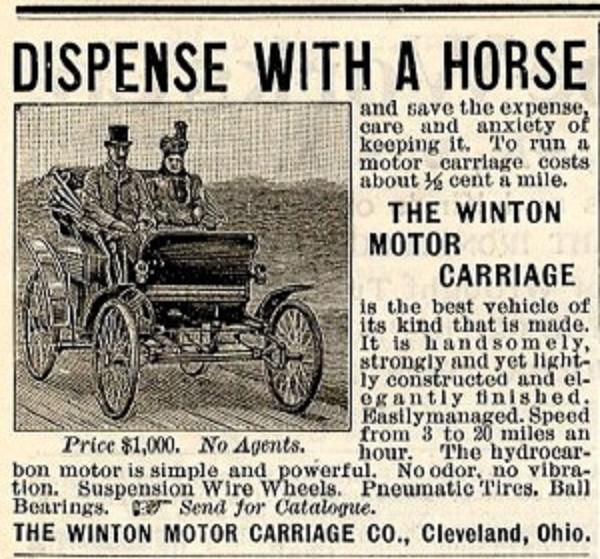
Winton was a firm believer that auto racing was the way to market his vehicles. So, in May of that year, Winton showed off his 10-horse power model with a race around a Cleveland horse track. There it impressed onlookers after being clocked with a track speed of 33.64 MPH.

Despite the fast track times, critics were still concerned about the practicality of the automobiles. To assuage his doubters, Winton ordered an endurance run that saw his car make the 800 mile drive from Cleveland to New York City.

The marketing worked and just over a year after launching his car company, Winton made his first sale to Robert Allison of Port Carbon, PA. Winton would go on to sell 21 more cars that year at the list price of $1000 (roughly $30,000 in today’s dollars)

By 1899, Winton would sell more than 100 cars, making his company the largest manufacturer of gas powered automobiles in the USA.

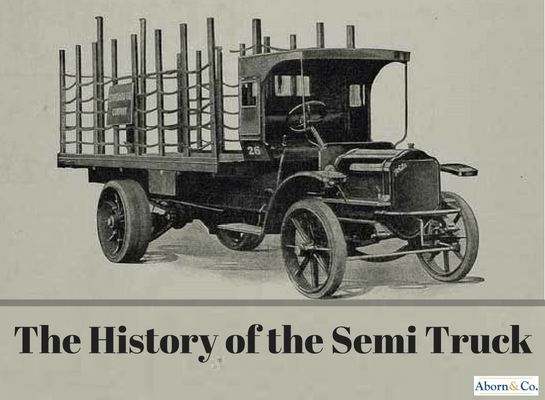
However, due to the success of the Winton automobile, the company was faced with a new problem. How to get their car to buyers, some spread out across the country, without adding significant wear and tear to the vehicles by driving them directly to customers. To solve this problem, Winton built the first ever auto hauler. This worked by converting a standard Winton automobile into a tractor and then attaching a trailer to the rear which could pull one car at a time.

In 1903, a Winton Automobile made the first successful drive across the US, as Dr. Horatio Nelson Jackson made the trek from San Francisco to Manhattan in 63 days, 12 hours, and 30 minutes. Since interstate highways didn’t yet exist, this was quite the trip that often saw Jackson and his passenger, a mechanic, driving miles out of their way to get beyond impassable roads and terrain. They even needed to use a series of pulleys, horses, and good old fashion sweet equity to hoist the car over rocks and pull it free from sand.

By 1910, improvements in engines, transmissions, and expanded roadways gave rise to the popularity of shipping via truck. In 1914 there were over 100,000 trucks on America’s roads. At this point, there were so many trucks in operation that 4 states enacted the very first weight limits for semis ranging from 18,000 lbs. to 28,000 lbs. Still, solid tires, a lack of practical trailers, poor rural roads, and a 15 mph speed limit kept trucks confined to short-haul urban routes.

While it was the need to move cars that saw the development of the first semi-truck, it was a rich guy with a boat that had to get to Michigan who’s order for a trailer began production on what would eventually become the modern semi trailer. It was 1914 that Frederic M. Sibley asked August Charles Fruehauf to build a trailer for his Ford Model T that would pull the businessman’s boat. In fact, Sibley was so impressed by Fruehauf’s work that he then commissioned him to make trailers for his lumber yard.

Fruehauf, who was a blacksmith and carriage maker by trade, began the Fruehauf Trailer Company in 1918. Industries like dairy, lumber, and fuel oil took notice of these “go-anywhere” trailers almost immediately. Their original marketing campaign gave birth to the slogan, “A horse can pull more than it can carry, so can a truck.” Fruehauf trailers would eventually see action in World War I, World War II, and the Korean War. During this period of extreme success, the company would hold over 150 military patents.

Like most industrial technologies, a war time need rapidly aided in the development of long-haul trucking. Congestion on the railroads highlighted the need for alternative modes of transportation to move cargo. During the war years of 1914-18, Roy Chapin began work on the development of long distance trucking shipments. Chapin soon realized that trucks could travel much further on inflatable tires as opposed to the solid ones that trucks currently used.
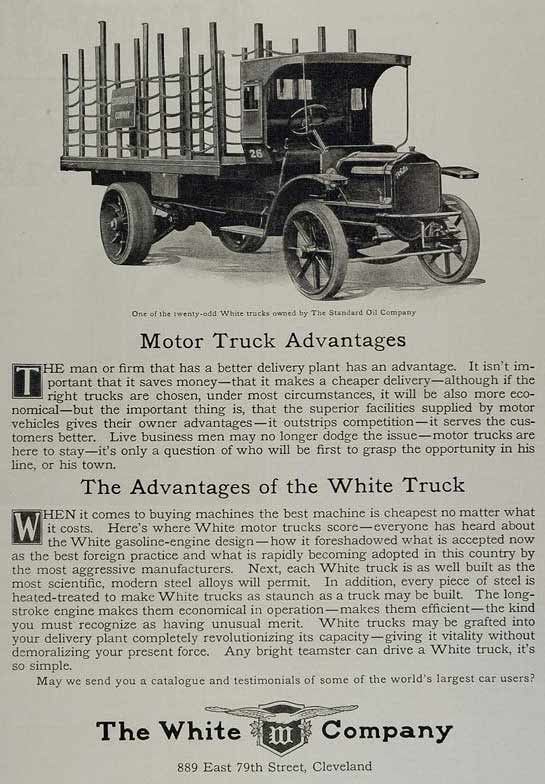
Concurrently, two truck manufacturers would rise to prominence by 1920, White Motor Company and Mack Trucks. By the start of 20’s there were over a million trucks on America’s roadways.

Through the next decade, a number of improvements would go a longways in increasing the proliferation of the truck. Diesel engines increased fuel efficiency by 25-40% over gasoline engines, truck and trailer sizes started adhering to standards, and power assisted steering and brakes were developed. By 1933, trucks would become so common that all states had some form of truck weight regulation.

Trucking would undergo a number of refinements and changes in the ensuing years, but none were as impactful as what would in occur in 1956. The Federal Highway Act of 1956 was the first step in connecting the country. Enacted by President Eisenhower, the bill authorized $25 billion (roughly $232 billion in today’s money) for the construction of over 40,000 miles of interstate highway over a 10-year period. It was the largest public works project in American history up until that time. The act also included the first set of federal maximum gross vehicle limits for trucks, which capped at 73,280 lbs.

Just as the Federal Highway Act was breaking ground on America’s freeway system, Malcom McLean introduced his revolutionary new shipping container. This standardized metal box would change the way modern containerized intermodal shipping would be handled from then on. It allowed trucks, trains, and ships to all use similar equipment for transporting the same loads. This dramatically increased efficiencies and allowed for fluid transfer between multiple modes of transportation.

It wouldn’t be until the 1970’s, when trucking hit Hollywood, that life behind the wheel of a big rig became synonymous with cool. With over 18 million trucks on the road, Americans took notice and gave rise to trucker culture. Seen as lone wolf outlaws, renegades, and free birds, truckers found their niche amongst an interested public. Movies like ‘Smokey and the Bandit’ and songs like ‘Convey’ rose to the top of the box office and Billboard charts. Even CB radio slang became popular enough to find its way into everyday conversation.

Unfortunately, by the end of the decade things would change. The 1979 energy crisis availed the favor that truckers had just received from a once endearing public. A series of violent protests and strikes, as well as changing cultural dynamics would push the mainstream perception of truckers back into the shadows.

The Motor Carrier Act of 1980 deregulated the trucking industry and opened the floodgates for the number of companies that could operate as carriers. This, along with rapid de-unionization, ultimately hurt driver pay. The public spotlight moved on, and truckers were now relegated to horror movies where they’re portrayed as sociopathic, road-raging, highway stalkers.

By this point, trailers had undergone their own evolution. This was due to the use of standardized shipping pallets. The typical North American grocer’s pallet is 48 inches long by 40 inches wide. As trailers grew in size they would often do so at multiples of 4 feet. For a long time, the 48-foot dry van was the de facto standard in shipping due to regulation which limited overall vehicle length to 75 feet. Once those regulations were changed, the industry adopted the 53-foot trailer. These have room for 13 rows of pallets, plus and extra foot so that the door will close.

Last year the ELD mandate went into effect causing an industry wide uproar. This has spurred new debate over mandatory break times and hours of service regulations. In addition, the new regulations have changed the way carriers conduct their business. Shippers who delay drivers with significant dwell times are struggling to find decent rates and capacity as the industry adjusts to new demands. Shipper of choice has become the buzz term for what carriers think shippers should aspire to be.

In 2017 trucking accounted for $719 billion in total revenue, across 15.5 million trucks, which transported 71% of all US goods. By 2018, trucking shipments were outpacing the number of available trucks as the US faces a capacity crisis fueled by a nationwide driver shortage.

Over the next decade trucking revenue is projected to hit $1.25 trillion. In the 2020’s we’re likely to see wide spread use of new technologies like platooning, autonomous trucks, and digital freight matching services as cargo gets uberized. As the history of the semi truck continues to be written, the next chapter in this industry changing saga could be its most exciting one yet.

We’ll leave you with some facts & figures:


  • There are just under 3.5 million truck drivers in the United States.
  • Trailers are typically 53 feet long
  • One-third of all of the semi trucks operating in the U.S. are registered in California, Florida, and Texas.
  • $41.3 billion the amount paid by commercial trucks in federal and state highway-user taxes in 2015.
  • 450.4 billion total miles traveled by all registered trucks in 2015. To put that into perspective: the sun is 93 million miles away. That’s a round trip to the sun and back more than 2,421 times!
  • Trucks get roughly 7.2 MPG
  • The maximum weight for a U.S. semi truck and full trailer is 80,000 pounds spread over 18 conventional wheels.
  • How much power does it take to move a fully loaded semi and trailer? A Detroit Diesel DD15 14.8-liter inline six-cylinder engine weighs 2880 pounds, or 345 pounds more than a Mini Cooper. This colossal powerplant makes up to 560 hp and 1850 lb-ft of torque.
  • The top-selling brand of semi truck is Freightliner. Freightliner is owned by Daimler Trucks North America, which also owns the Western Star brand. Second most popular is Navistar International, followed by PACCAR, which owns the Peterbilt and Kenworth brands. Fourth is Volvo, which also owns the Mack brand.
  • Antilock brakes on semi trucks have been required since 1997, which has significantly reduced the number of jackknife crashes, in which the rear wheels of the truck lock up and the trailer swings around to an acute angle with the truck. Today the most dangerous semi accidents are rollovers.

Download our Trucking by the Numbers Infographic here.
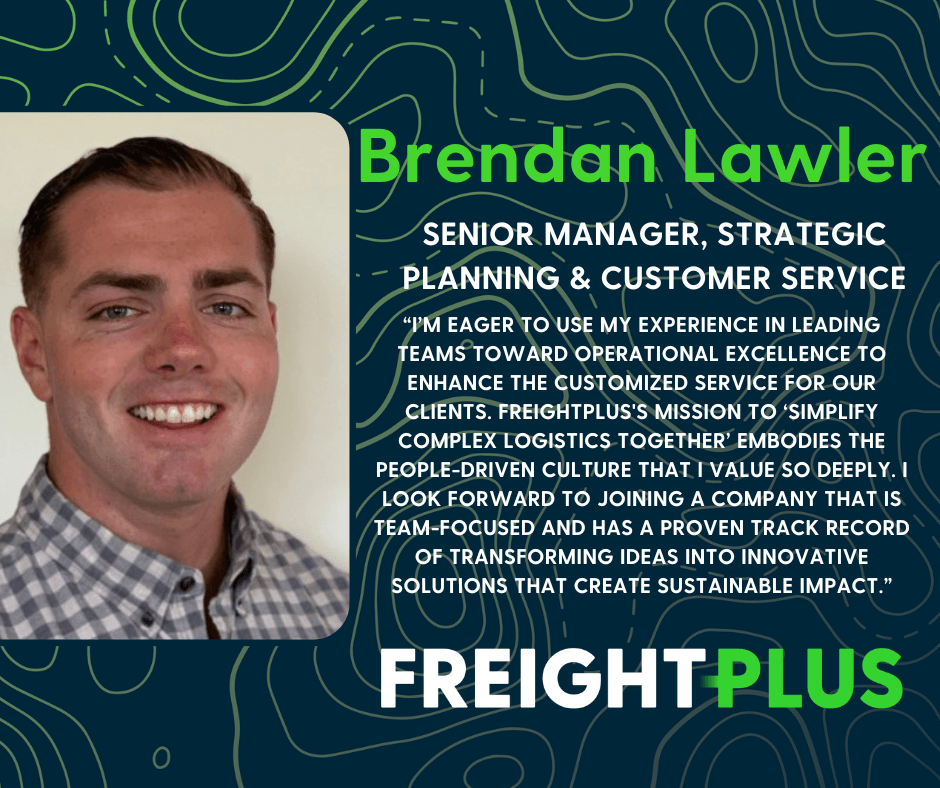
Brendan Lawler Joins FreightPlus
October 4, 2022
Innovative managed transportation provider continues to invest in hiring and developing the best talent within the logistics space QUINCY, Mass — FreightPlus, a data-driven managed transportation solutions provider, announced Brendan Lawler has joined as Senior Manager of Strategic Planning and Customer Service. Lawler brings in over seven years of experience leading diverse, cross-functional teams in challenging, chaotic, and ambiguous environments. In his new role, Lawler will own all aspects of planning, optimizing, appointing, tracking and servicing customers’ freight. He looks forward to standardizing the planning and customer service functions within the department and incrementally improving the throughput of the team through process improvement and technology integration. “I am energized by the opportunity to help continue FreightPlus’s growth as a data-driven transportation management solutions provider,” says Lawler. “I’m eager to use my experience in leading teams toward operational excellence to enhance the customized service for our clients. FreightPlus's mission to ‘simplify complex logistics together’ embodies the people-driven culture that I value so deeply. I look forward to joining a company that is team-focused and has a proven track record of transforming ideas into innovative solutions that create sustainable impact.” Lawler previously served as a Captain in the Marine Corps and as Senior Operations Manager within Amazon Transportation Services, where he focused on driving operational excellence and utilizing new technology to drive process improvements. In his tenure, he was responsible for developing and implementing new network-level process improvements for both under-the-roof (UTR) and over-the-road (OTR) operations, as well as spearheading the effort of optimizing the synchronization of warehouse and transportation operations. With revenue and employee count quadrupling over the past five years, FreightPlus was listed no. 184 on the Inc. 5000 list of fastest-growing private companies in America in 2022. Chief Operating Officer Ben Graeff comments, “I am so excited to welcome Brendan to FreightPlus. Brendan brings a deep background in operational excellence from his time in the Marine Corps and Amazon Transportation. He is a quiet leader that leads by example, lives in the day-to-day details, and is the exact right person to help us scale our operation and customer service teams through our continued growth.” About FreightPlus FreightPlus is an industry provider of data-driven transportation management, offering businesses customized and fully tailored managed transportation solutions in a boutique environment where clients get the individual attention they deserve. FreightPlus combines first class customer service with innovative technology and industry best practices to help mid-size and growing companies work efficiently in the $800B domestic transportation market. Visit FreightPlus.io for more information. ### Media Contact: Courtney Conyers Marketing & Communications cconyers@freightplus.io
August 16, 2022
For the 2nd Time, FreightPlus Appears on the Inc. 5000, Ranking No. 184 on the List of Fastest-growing Privately Held Companies in America FreightPlus recognizes a three-year revenue growth rate of 2,846%  NEW YORK, August 16, 2022 – Today, Inc. revealed that FreightPlus is No. 184 on its annual Inc. 5000 list, the most prestigious ranking of the fastest-growing private companies in America. The list represents a one-of-a-kind look at the most successful companies within the economy’s most dynamic segment—its independent businesses. Facebook, Chobani, Under Armour, Microsoft, Patagonia, and many other well-known names gained their first national exposure as honorees on the Inc. 5000. “We are honored to be featured on the annual Inc. 5000 list for the second year in a row,” said Stephen Aborn, FreightPlus Chief Executive Officer. “This award and our ranking reflect the continuous dedication from our team to providing our customers with the people, technology and processes to build best-in-class logistics programs. We are thrilled to be recognized as we strive to bring customer-centric and innovative solutions to the world of logistics.” The companies on the 2022 Inc. 5000 have not only been successful, but have also demonstrated resilience amid supply chain woes, labor shortages, and the ongoing impact of Covid-19. Among the top 500, the average median three-year revenue growth rate soared to 2,144 percent. Together, those companies added more than 68,394 jobs over the past three years. Complete results of the Inc. 5000, including company profiles and an interactive database that can be sorted by industry, region, and other criteria, can be found at www.inc.com/inc5000 . The top 500 companies are featured in the September issue of Inc. magazine, which will be available on August 23. “The accomplishment of building one of the fastest-growing companies in the U.S., in light of recent economic roadblocks, cannot be overstated,” says Scott Omelianuk, editor-in-chief of Inc. “Inc. is thrilled to honor the companies that have established themselves through innovation, hard work, and rising to the challenges of today.” About FreightPlus FreightPlus is an industry provider of data-driven transportation management offering businesses customized and fully tailored managed transportation solutions in a boutique environment where clients get the individual attention they deserve. FreightPlus combines first class customer service with innovative technology and industry practices to help mid-size and growing companies work efficiently in the $800B domestic transportation market. Visit https://www.freightplus.io/ for more information. Media Contact: Courtney Conyers cconyers@freightplus.io
July 26, 2022
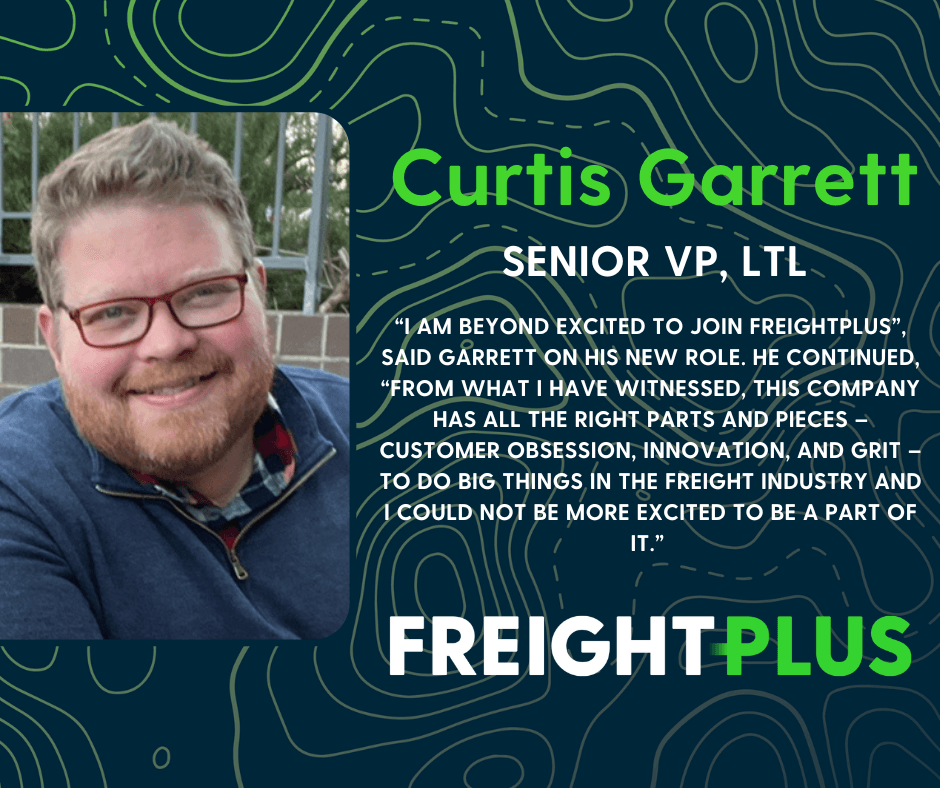
Innovative managed transportation provider brings on LTL industry leader to continue to support rapid growth QUINCY, Mass — FreightPlus, a data-driven managed transportation solutions provider, has announced the expansion of their company with the hiring of Curtis Garrett, joining as Senior Vice President of LTL. Garrett will focus on improving carrier relationships and interactions through utilizing technology and strategic processes. With revenue and employee count quadrupling over the past five years, FreightPlus was named the second-fastest growing privately held company in Massachusetts by the Boston Business Journal. FreightPlus was also listed as the 783 rd fastest-growing company on the 2021 Inc 5000 list. CEO Stephen Aborn commented, “I am thrilled to have the opportunity to work with Curtis. Expanding our team with his experience is a great step in the right direction for FreightPlus as we continue to look for the most innovative and ambitious thinkers in the logistics space.” Garrett brings fifteen years of LTL experience prior to joining FreightPlus, including eight with ODFL in operations, driving, pricing, yield, and W&I. Since departing from ODFL, he has spent six years on the 3PL, software and consulting side of the industry, recently serving as Vice President of Pricing and then Chief Strategy Officer at Reconex. Garrett is fascinated with technology and is truly a student of the industry. Having overseen hundreds of millions of dollars in revenue on the business profitability side, as well as pricing and carrier relationships and procurement, Garrett is more determined than ever to break down silos and get everyone on the same playing field. “I am beyond excited to join FreightPlus”, said Garrett on his new role. He continued, “from what I have witnessed, this company has all the right parts and pieces – customer obsession, innovation, and grit – to do big things in the freight industry and I could not be more excited to be a part of it.” About FreightPlus FreightPlus is an industry provider of data-driven transportation management offering businesses customized and fully tailored managed transportation solutions in a boutique environment where clients get the individual attention they deserve. FreightPlus combines first-class customer service with innovative technology and industry practices to help mid-size and growing companies work efficiently in the $800B domestic transportation market. Visit https://www.freightplus.io/ for more information. Media Contact: Courtney Conyers cconyers@freightplus.io
FreightPlus Named to Boston Business Journal's Fast 50 List
March 28, 2022
FreightPlus has been named to Boston Business Journal's exclusive 2022 Fast 50 list for the first time.
Ben Graeff Appointed as FreightPlus Chief Operating Officer
March 7, 2022
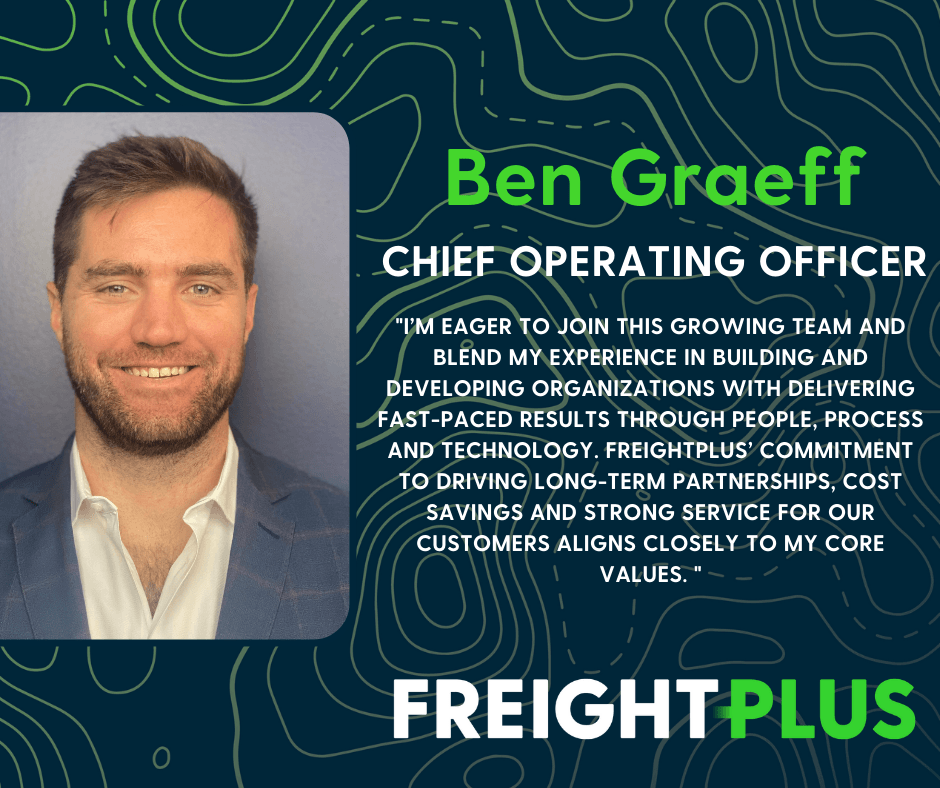
Innovative managed transportation provider continues to invest in executive team to support the company’s rapid growth. QUINCY, Mass — FreightPlus, a data-driven managed transportation solutions provider, announced Ben Graeff has joined as Chief Operating Officer, the first in company history. Graeff will be responsible for the company’s operational, managerial, and product strategy, as well as driving day to day and quarterly results and innovation in FreightPlus’ next stage of scale and growth. With revenue and employee count quadrupling over the past five years, FreightPlus was named to The Inc. 5000 list of fastest-growing private companies in America in 2021. CEO Stephen Aborn commented, “I am thrilled to welcome Ben to FreightPlus. His natural ability to lead and his experience scaling large businesses at the intersection of technology and operations will be invaluable to our growth story. Every person or partner that works with Ben will be better for it.” Graeff brings over 10 years of experience building technology and businesses at Amazon. Prior to joining FreightPlus, he served as Sr. Manager, Product Management and Data Analytics within Amazon Transportation Services. During his tenure, Graeff was responsible for P&L ownership in Amazon’s consumer retail division, developing new software and customer experiences for Amazon Prime, as well as product development and business results in operations and logistics across the globe. “I am excited to join a company whose mission embodies solving complex problems in partnership with its customers,” said Graeff on his new role. He continued, “Like all great organizations , FreightPlus is powered by its people. I’m eager to join this growing team and blend my experience in building and developing organizations with delivering fast-paced results through people, process and technology. FreightPlus’ commitment to driving long-term partnerships, cost savings and strong service for our customers aligns closely to my core values. I look forward to continuing to build the products, processes, programs and technologies to drive FreightPlus’ future growth as a data-driven transportation management service.” About FreightPlus About FreightPlus FreightPlus is an industry provider of data-driven transportation management offering businesses customized and fully tailored managed transportation solutions in a boutique environment where clients get the individual attention they deserve. FreightPlus combines first-class customer service with innovative technology and industry practices to help mid-size and growing companies work efficiently in the $800B domestic transportation market. Visit https://www.freightplus.io/ for more information. Media Contact: Courtney Conyers cconyers@freightplus.io
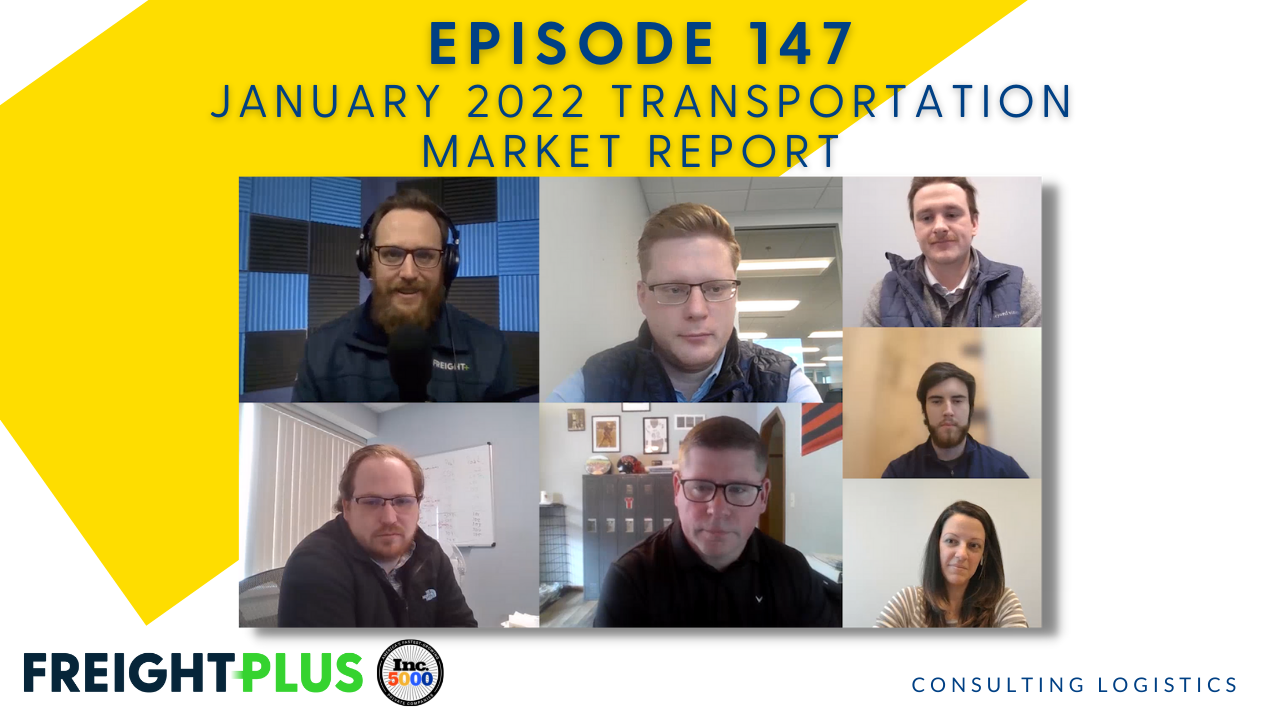
Episode 147 -January 2022 Transportation Market Report
By Kyle MacNaught • 48 min listen February 4, 2022
In this episode of Consulting Logistics, FreightPlus subject matter experts provide a detailed analysis of the transportation market for the month of January 2022.
Freight Market Indicators in December 2021
By Kyle MacNaught • 2 min read January 24, 2022
FreightPlus subject matter experts provide a detailed analysis of some leading and trailing indicators from the month of December 2021 that forecast what is on the horizon for the transportation market.
CEO of FreightPlus Stephen Aborn
By Kyle MacNaught January 18, 2022
CEO of FreightPlus Stephen Aborn Featured in Inbound Logistics
Ocean Freight Performance in December 2021
By Kyle MacNaught • 2 min read January 18, 2022
FreightPlus subject matter experts provide a detailed analysis of what occurred in the Ocean transportation mode for the month of December 2021.
Intermodal Performance in December 2021
By Kyle MacNaught • 2 min read January 17, 2022
FreightPlus subject matter experts provide a detailed analysis of what occurred in the intermodal (IMDL) transportation mode for the month of December 2021.
Show More