IBM B2B/MFT Innovation Day: Blockchain and Supply Chain Data
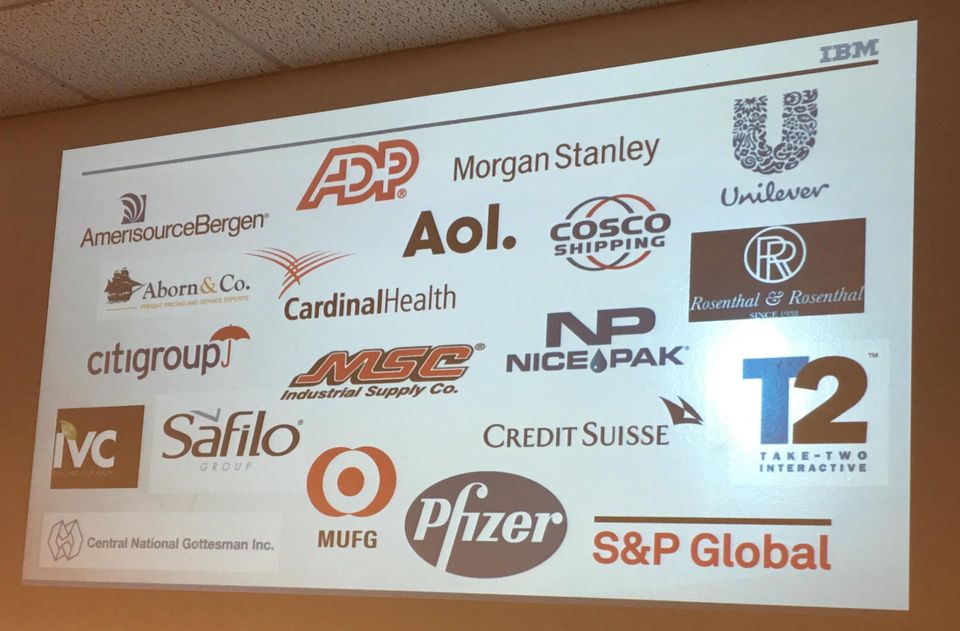
Palisades, NY - Aborn & Co. was honored with the privilege of attending IBM's B2B / MFT Innovation Day on Thursday, June 14th. The tech heavy event covered the pot ential relationships between AI, Blockchain, Internet of Things (IoT), EDI, and the end user.
The question everyone asks is, "What is blockchain and how will we use it?" Learning about how blockchain will relate to our supply chains from a data perspective added a tremendous amount of clarity to its use potential. Luke Raiano, IBM Senior Offering Manager B2B/MFT, used the life cycle of a common grocery purchase to highlight this point.
"In order to buy detergent a lot of data flow has to occur. Proctor & Gamble has to create the product, it's then bottled by a third-party, then entered into the distribution channel, added to grocery store shelves, and then purchased." Raiano said. "All of that data must be collected and mined in order to gain a competitive advantage using these technologies."
When we look at a product from birth to consumption it is clear that many data events occur along that timeline. Traditionally, supply chain data is held in silos. Since massive data sharing is fundamental to AI and blockchain, companies will need to rethink their data capture process.
"Data volume will double by 2020." Luke Raiano, IBM.
Analytics are only going to grow stronger and more impactful. For example, Blockchain doesn't just look to tie in shipping data but it can also collect social media data. In concert with AI, it could use that data to identify market trends in real-time. Look at the fidget spinner. A fad product that only had a two-month shelf life. Now there are discount bins overflowing with them and millions more sitting unsold in warehouses. AI could help identify these downtrends and alert your purchasing department.
Blockchain is a new technology that most supply chain professionals have zero experience with. Based on questions we've heard at some other conferences, people think it is a TMS and/or EDI replacement, a way to book freight, or a way to file entries. Becky Bates, IBM Offering Manager, added some clarity to the situation.
"(Blockchain) compliments and leverages EDI, it doesn't intend to replace it." Bates explained.
That's because blockchain is a connector not a substitute nor a replacement. IBM is heavily focused on the data collection and management possibilities of the technology. The future they see is one where data, AI, and blockchain connect the digital world to the physical world. A supply chain where data and machine learning supplement intuition and business sense.
All of this may sound highly technical and difficult to integrate into your business. Under the hood it is, and the user interfaces are still in their beta stages but IBM is building a foundation with security, data capture, and the end user in mind.
"On boarding onto a blockchain should be as easy as signing up for a rewards program." - Becky Bates, IBM
IBM is aware that since this isn't an IT tool it must have a user-friendly interface. They've even added their question and answer digital assistant super computer, Watson, as part of the design. In the near future, you may even ask it the most common question in our industry: "Where's my freight."