The Truck Driver Shortage and the Rising Cost of Everything
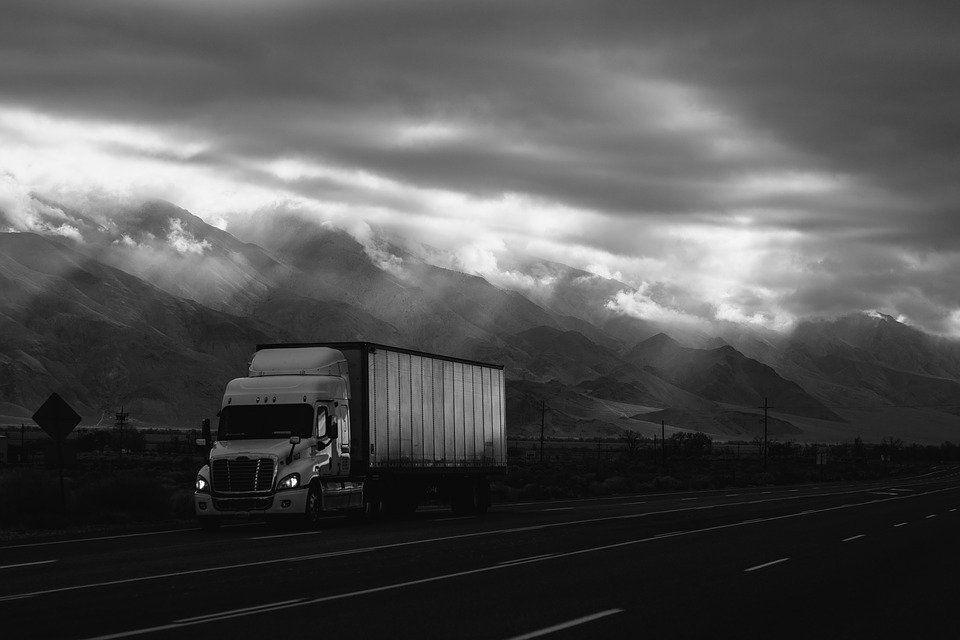
In 2018 shippers are paying more for freight that takes longer to move. While bad weather and ELD implementation exacerbated the issue, the reason rates have remained high points to a much greater problem: There simply aren't enough truck drivers in the United States of America.
A growing economy propelled by online sales, low unemployment, and a booming stock market is intersecting with a shrinking truck driver pool. Joyce Brenny, head of Brenny Transportation in Minnesota, tells The Washington Post
that her company increased driver pay 15 percent this year to try to attract more drivers. Many of her drivers now earn $80,000, yet she still can't find enough people for the job. According to government labor statistics many are paid far less and even more are dissatisfied with the solitary nomadic gig.
At last month's CONECT 22nd Annual Trade & Transportation Conference it was clear just how wide sweeping the issue was. Greg Ritter, Chief Customer Officer at XPO Logistics, warned of industry shortsightedness, "The larger carriers are consolidating and buying smaller carriers, not for their book of business, but for their drivers." What's most concerning about this is that not only does consolidation not add drivers to the market place, it may further deplete the pool of available drivers.
According to FleetOwner
truck driver retirement rates jumped to 33% last year, up from 22% in 2014. Unlike In the past, where workers would move to a new company when theirs was bought out, many are now avoiding the hassle entirely and quitting the business.
Bob Costello, chief economist at the American Trucking Associations, recently told The Washington Post
that in 2016 the United States was short 36,000 truck drivers. That number grew to a shortage of 51,000 drivers in 2017 and it only looks to be higher at the end of this year.
Self-driving trucks may be the future of the industry but not only are they years away from making a dent in the situation, they may currently be fueling the crisis. Young Americans have seen what disruptive technology can do across all industries and many feel that there is no long-term future behind the wheel of a big rig.
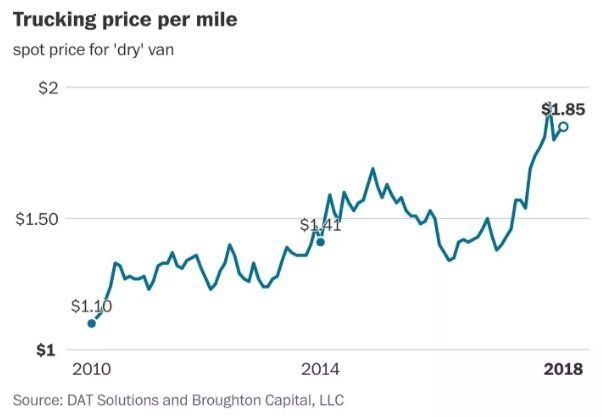
Escalating driver pay and rising diesel fuel costs ultimately mean higher consumer costs as shippers pass along the shipping buck and charge more for goods. Dry goods have already eclipsed past highs as rates climb north of $1.85 per mile. A 40 percent increase from a year ago, according to DAT Solutions.
Consider this, transportation and logistics account for roughly ten cents of every dollar. Drastic cost increases in the freight market can have a butterfly effect throughout the economy.
"I don't normally speak in hyperbole, but we're entering some uncharted territory," Donald Broughton of Broughton Capital and author of the Cass Freight Index said to The Washington Post, "If there is a 10 percent increase in transportation costs, that gives you a 1 percent increase in inflation for the broader economy. That's real."
So how can shippers save money on freight and mitigate some of these costs? The best place to start in a situation that's out of your control is by getting on a handle on what you can control. Use data to your advantage and drive value out of your existing supply chain. Seek alternate routing options and explore opportunities to consolidate. And most importantly, develop strong carrier relationships by negotiating beneficial long term contracts.
Carriers need to get more creative and should start embracing and investing in tech that is available now. While driverless trucks may be five to ten years away, there are opportunities being developed by companies like Uber the could limit truck idle times. For example, Uberized freight would use app based technology to match cargo with empty space on trucks. Just as carpooling isn't a new concept, neither are trucking consolidations, they'd simply be going digital.
With demand expected to outpace new drivers throughout the year we expect the cost of freight to rise. This holiday season shippers who aren't proactive will be delivering late freight at higher rates. That's something none of us can afford.
Concerned about your rising cost of freight?
Contact a trusted adviser at Aborn & Co. today for a complimentary consultation.