The Uberization of Trucking Part 2: The Players
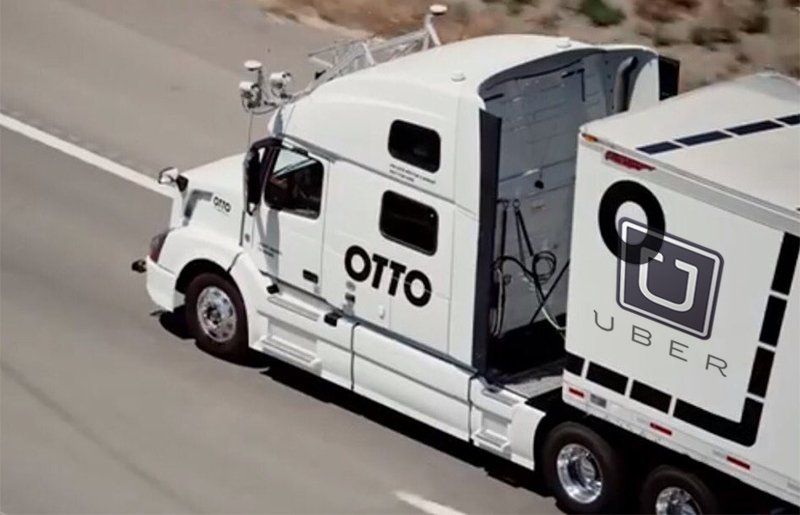
For part one of this blog series The Uberization of Trucking Part 1: An Overview click here
At roughly $800B per year, the U.S. trucking market is one of the largest and most important markets in the country. Conincidently, it is also one of the most fragmented. The top 25 largest trucking companies represent ~25% of marget segment share with 91% of U.S. trucking companies owning 6 trucks or fewer. What does this mean for a firm's supply chain? It means that on a national scale, shippers need to work with medium and small sized trucking companies in order to effectively find capacity and move their goods. Silicon Valley has taken notice of this fragmented system and aims to enter an industry that used to be miles from their purview.
After turning the taxi medalion industry on its ear in the mid-2010's and pivoting focus to autonomous vehicles, tech is aiming to expand the scope of their influence. With the ground work already paved by ride-sharing via apps like Uber and Lyft, it was only a matter of time before the carrier market became investors next entry point. As ride-sharing approaches critical mass, the players involved with its creation aren't blind to the need to diversify.
As the Wallstreet Journal reported
"Investors are pouring millions of dollars into startups hoping to disrupt the $700 billion (US) trucking industry, the latest example of Silicon Valley's efforts to upend the traditional economy."
"A series of startups are vying to become an Uber of trucking,' leveraging truck drivers' smartphones to quickly connect them with nearby companies looking to ship goods. The upstarts aim to reinvent a fragmented U.S. trucking industry that has long relied on third-party brokers, essentially travel agents for trucking who connect truckers with customers."
What makes Uber so popular:
Ease of use
Cost (cheaper than the model it is competing with)
User/Provider adoption (when you need a ride there is a car / when you drive a car there is a passenger)
So, if these key principals are applied to final mile delivery would that make it a success? Not everyone thinks so. In fact, Dick Metzler Chief Marketing Officer at UShip, believes route density is the key to success:
"What works is route density; short miles between stops. One to two hour deliveries destroys the ability of a carrier to consolidate a route. There is lots of dead venture capital dollars chasing the wrong stuff. If you back off to one day deliveries, there is at least some prospect at getting to delivery density. But consumers don't want one day. And they want free deliveries."
Uship may be a new player in the market but they come with old money behind them as DB Schenker purchased a $25 million stake in the firm last February.
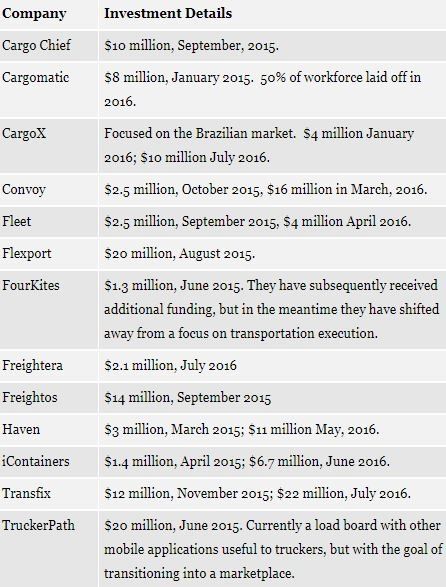
Uship isn't alone in their quest to Uberize freight. As more than a dozen start-ups have millions in venture capital pushing them towards the finish line.
Select venture investments since January 1, 2015 in long haul freight technology startups
Start-ups aren't the only one's looking to get their foot in the door as a number of big name brands, already deeply entrenched in the cargo delivery space, are ahead of the race to market. However, it's not the XPO Logistics or Schneider's of the world behind the wheel. It's tech driven capital by a near Justice League of all-star founders who have already disrupted their respective markets: Amazon Inc. founder Jeff Bezos, Salesforce.com founder Marc Benioff, eBay founder Pierre Omidyar, Tesla Motors founder Elon Musk, and Uber Technologies Inc. co-founder Garrett Camp.
So, is big tech's big gamble on owning the North American freight market place a realistic venture? It's hard to doubt the capabilities of those involved. One thing is certain, not everyone will be standing at the end of this battle. Who makes it through and how much they stand to gain all depends on the opportunity.
Next week the next article in this blog series The Uberization of Trucking Part 3: Problems
Read the first part of this blog series The Uberiztion of Trucking Part 1: An Overview